An Operations and Management (O&M) plan for each site should be developed during the planning and design phase. Approval to implement an O&M Plan in perpetuity should be requested as part of the ConCom submission.
Wetland Restoration projects need long term management. Providing an avenue whereby requesting permission from the Con Com during permit application submission to implement a long-term Operations and Management plan (including habitat management) for the site in perpetuity from the ConCom would be helpful. Examples of the need and a few recommendations were articulated in a breakout session at the 2026 LO Summit.
At Mattapoisett water flow patterns and ensuring water does not get backed up needs to be monitored to make sure that a public road will not be inundated. If the water flow pattern clogs or shifts, the cause needs to be discovered and an intervention may be required. The owner should not have to submit a new permit for the intervention. An O&M plan can list specific actions to be taken should drainage paths clog (e.g., clear debris; cut back heavy plant growth in designed drainage swales). Fixes beyond hand tools require notification and coordination with Con Com. Management of invasive plants, mowing of trails, periodic mowing of sandplain grassland habitat and managing turtle nesting habitat that occur within 100 feet of regulated wetlands were included in the O&M Plan submitted to Con Com for perpetual approval.
At Tidmarsh, four invasive plant species were identified prior to design development: European willow, Japanese knotweed, Phragmites, Purple loosestrife. At the first ConCom review, the team did not ask for permission to treat these species; however, we did go back and got treatment of phragmites written into the Order of Conditions. Had there been an O&M plan, all four species would have been included.
- Provide examples of good O&M plans to property owners when they decide to pursue wetland restoration as an option.
- Make a long term management and operations (O&M) plan a deliverable during the planning/design stage of the project
- Submit the plan with the required long-term management interventions to ConCom (or similar local review) and get appropriate remediation actions written into a perpetual order of conditions.
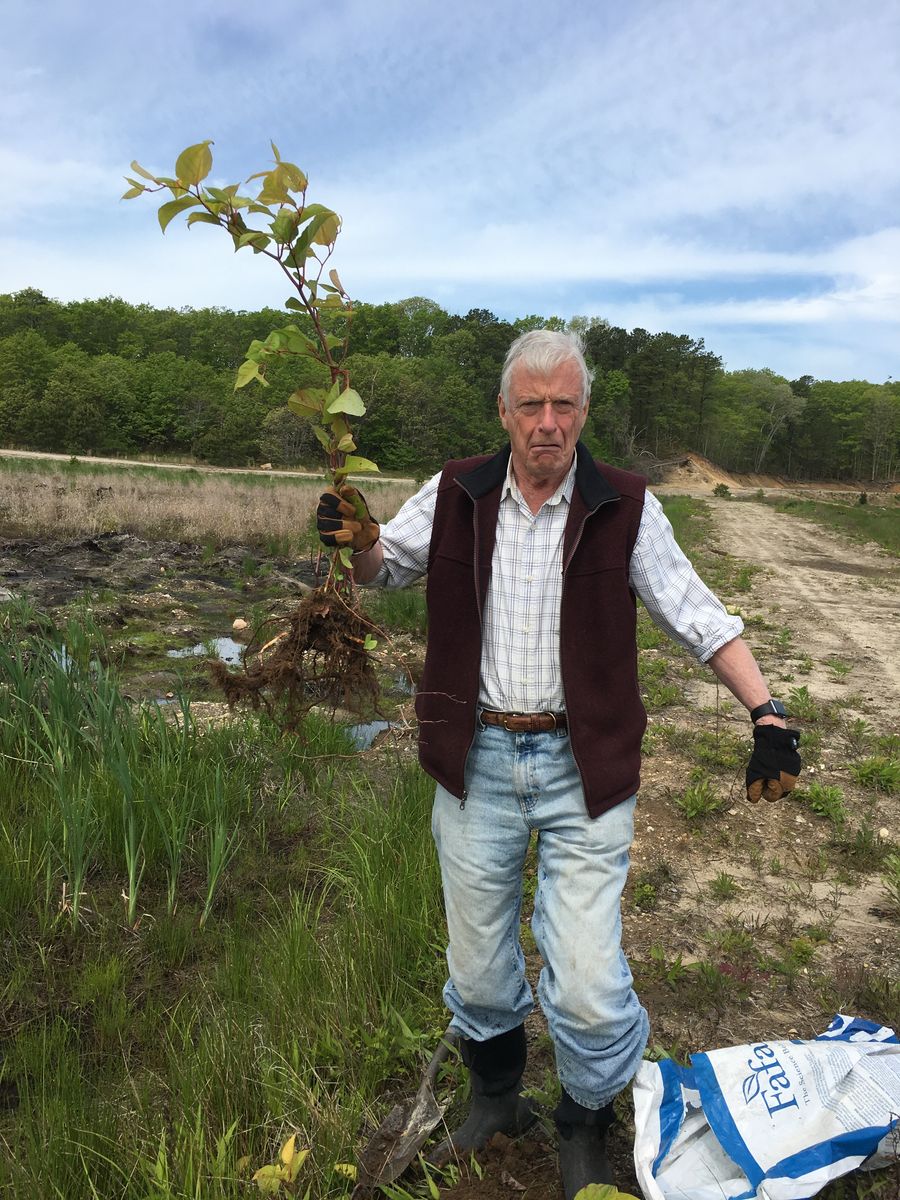
May 13, 2017 Evan Schulman pulls Japanese knotweed at Tidmarsh. The team thought all knotweed had been removed from a berm, but just a little root material was moved and used to fill an edge ditch along with other berm material. This area needs perpetual vigilance.
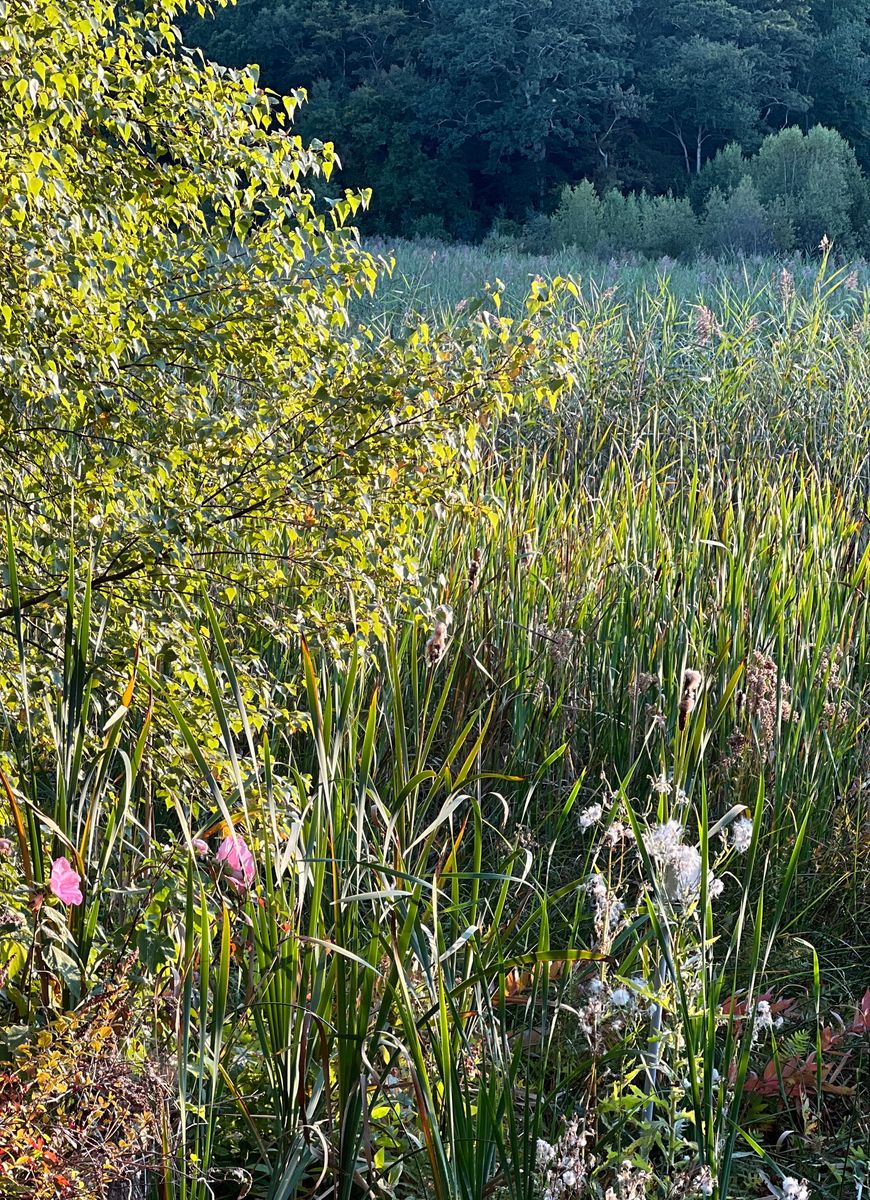
Following the draining of the main 35 acre reservoir at Tidmarsh, phragmites and European willow sprang up. An O&M plan with a perpetual management permit would provide an efficient approach to long term management..

