
Growing Atlantic White Cedars for Wetland Restoration Sites
Designing Atlantic white cedar planting/sprouting trials at Marstons Mills
Living Observatory is developing an Atlantic white cedar (AWC) planting study at the Marstons Mills Comprehensive Study Area with Barnstable Clean Water Coalition and the restoration team. We will plant three hundred young AWC trees (4 - 7 ft tall) monitor them for vigor, mortality, growth. The trees will be divided between 3 to 5 upland islands and shelfs within the upper cells of the restoration area. In addition to tree plantings we are considering a pilot seed germination study.
We are still finalizing the trial treatments. This posts reflects my thinking as of the last site visit. Supporting photos at end of post.
- Mound areas in the upper cells will be built with a loamy mixture generated from the excavated growing surface and underlying peat.
- The construction team is preserving live Sphagnum in kiddy pools, this sphagnum can be translocated to AWC areas and may serve as a buffering medium to cover new plantings, and/or a experimental medium for seed sprouting.
- Areas treated with Microtopography (scoop and dump, pit and mound) will also be available for control planting.
This offers an opportunity to investigate how strategic preservation and re-use of site material can enhance growth / survival / recruitment of AWC. Specifically we will test how intentionally mixed and graded soils and preserved Sphagnum improves growth of transplant trees and recruitment of seed compared to micro-topography. We will use a split plot block design to incorporate site environmental variability into the design.
- How much suitable planting area is available (e.g. design between 6" and 18"), and what tree density fits it?
- Will microtopography be co-occuring with adjacent to each graded mound.
- Should the AWC planting study include a leaf-mold treatment?
- How much viable seed and live Sphagnum can we allocate to the pilot?
- What seed dose, moss coverage, and number of quadrats are practical?
- Within what size quadrat should we monitor and spread seed. 3m by 3m or smaller?
- How often can we revisit the quadrats, and what recruitment and survival would make seed spreading worth expanding?
- How can we incorporate citizen science / outdoor classroom monitoring into AWC trials?
For this planting we will place trees approximately ~6"- 18" inches above the estimated design water table elevation to account for settling. Previous monitoring by C. Hatch suggests that AWC can survive and grow, and recruit new trees when the water table is within 10cm (4") of the ground surface. For spacing, we will use the contractors design spec, of trees spaced roughly 6–10 feet apart. We will place trees in designated graded mounds as well as in adjacent microtopography areas, and compare growth.
If the 300 trees are divided into four planting blocks, then 75 trees would be available per block. Within each planting block trees would be further divided into the following, A. graded "loam" or B. micro-topography groups.
Tree level treatments:
Within each group a random subset of trees could covered with transplanted sphagnum moss, as a nested treatment group. The scale of the sphagnum treatment will depend on how much the construction team is able to preserve.
Trees may also be treated with leaf mold. Either placed at the growing surface or at the bottom of the hole.
Tree level treatments, therefore could be: 1. control bare surface, 2. covered with leaf mold, 3. covered with spagnum, 4. covered with straw.
Other considerations would be micorhizae dip and or organic fertilizer.
Each tree will be fitted with a rodent collar, a support stake, and a numbered aluminum tag.
Before planting each tree will be unpacked from its pot, roots will be separated /cut to enable spreading.
Holes will be dug/augared 12 - 18" in width and depth, roots will be spread out and the hole will be back filled.
Each tree will be measured for height, diameter, vigor, soil moisture, and the specific treatment area will be recorded in a data sheet.
The seed-emergence trial would be a separate, small pilot. The main question is how to the conditions where the seed is placed influence the ultimate sprouting, and successful recruitment of AWC.
Quadrats between 1 and 3 square-meter depending on depending on available Sphagnum. At each selected location, we could compare four combinations: seed with Sphagnum, seed without added Sphagnum, Sphagnum without added seed, and neither addition. The unseeded quadrats would help distinguish the response to spreading seed from background recruitment. Quadrats could be placed both within an AWC planting area and outside of AWC.
Further details will be determined in conversations with the design team. The key limitations are time, logistics, availability of sphagnum, and seed.
At each quadrat, we would count newly emerged seedlings and follow their survival, alongside observations of Sphagnum cover, competing vegetation, moisture, flooding and light. Repeat photographs would help document changes. The pilot’s purpose is to assess whether seed spreading produces additional seedlings that persist, and whether the results justify a larger trial.
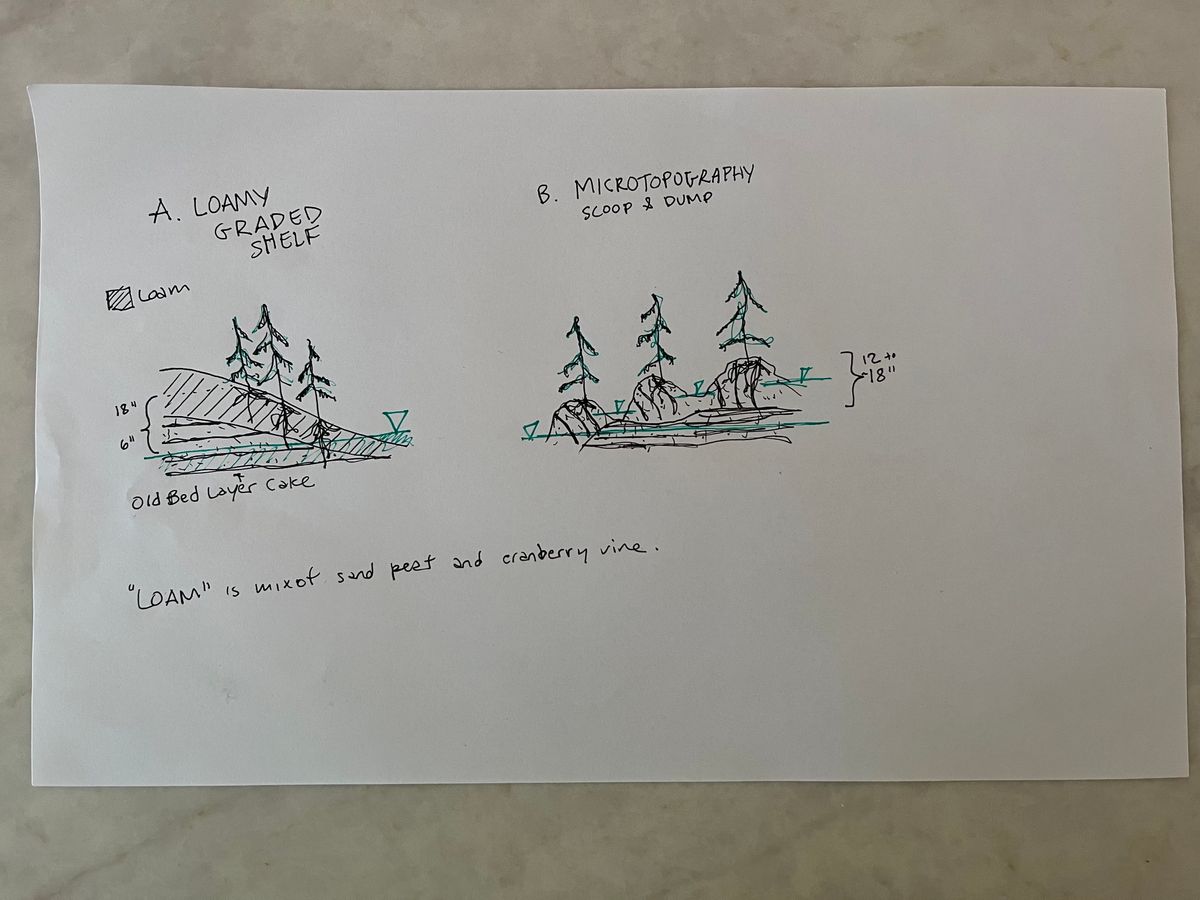
Example treatments (A. Graded Loam, B. Microtopography).
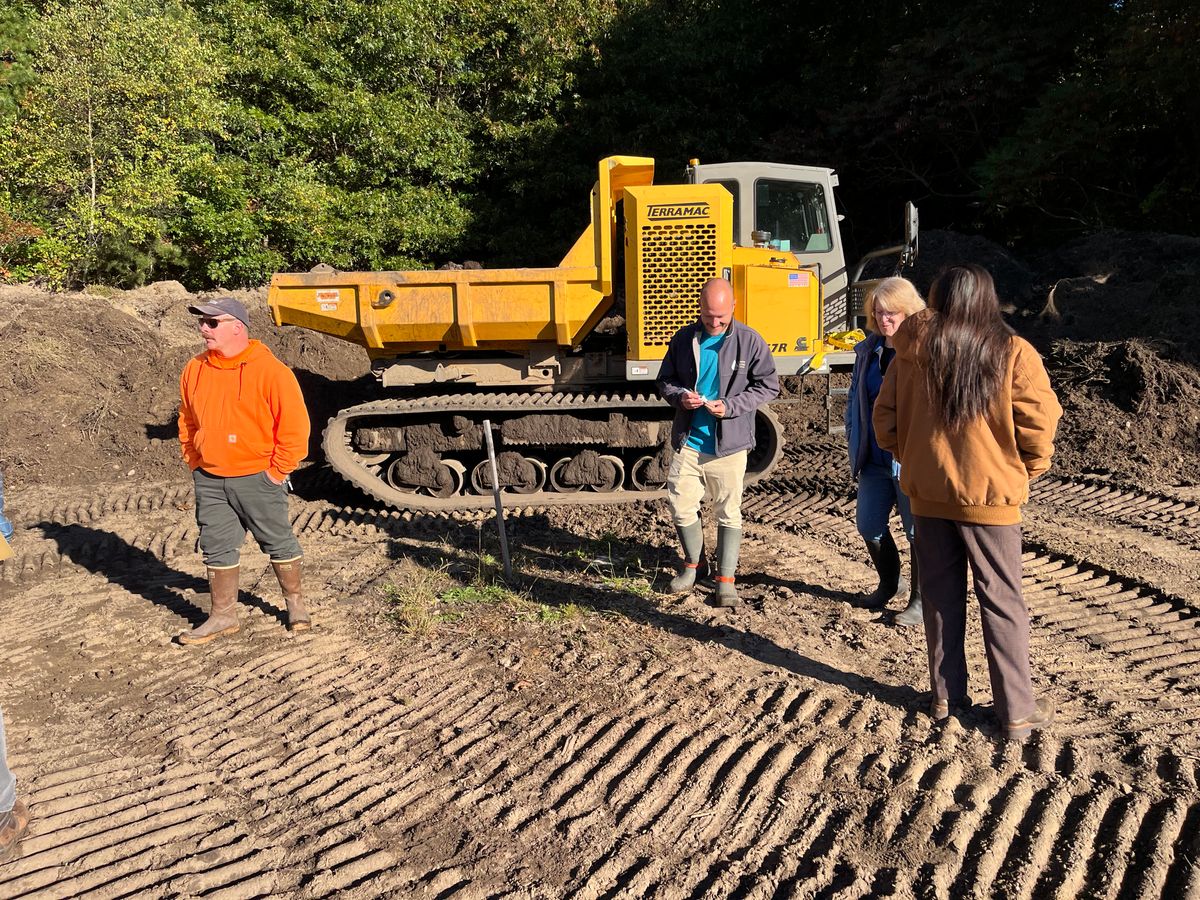
Image of BCWC staff, borrow pit, spoil, with loamy mixture excavated from bed.
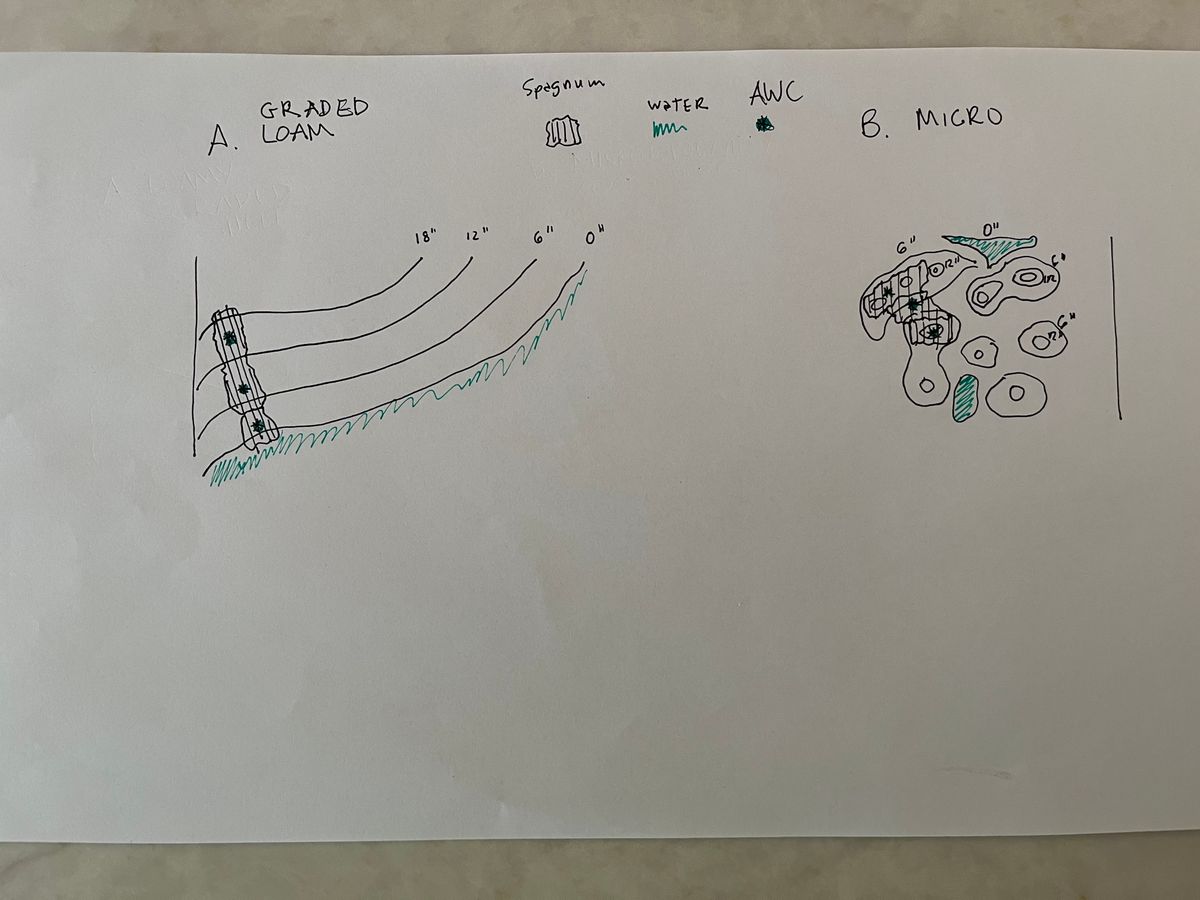
Plan view (areal) of example graded loam and microtopography surface treatments with sphagnum and AWC transplant.
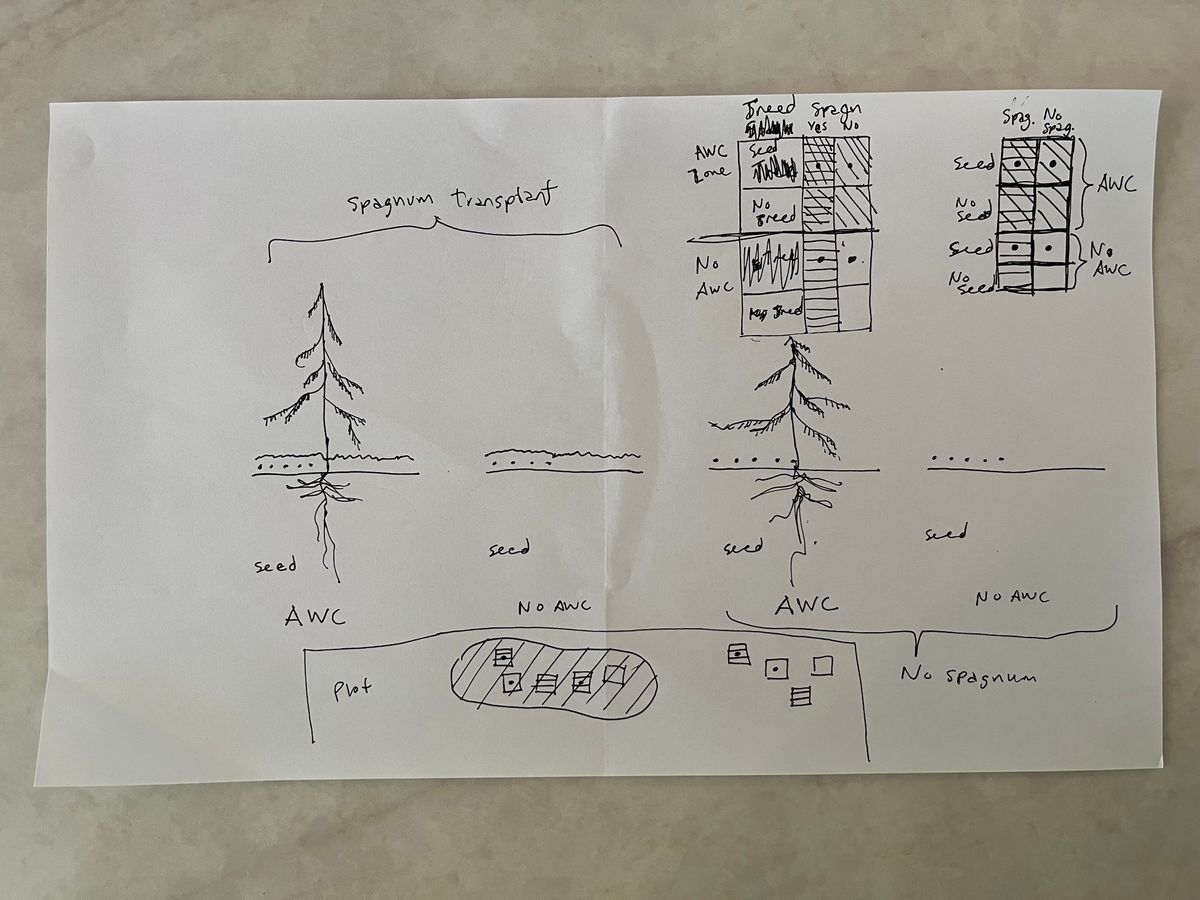
Example level surface treatments with/ without sphagnum.
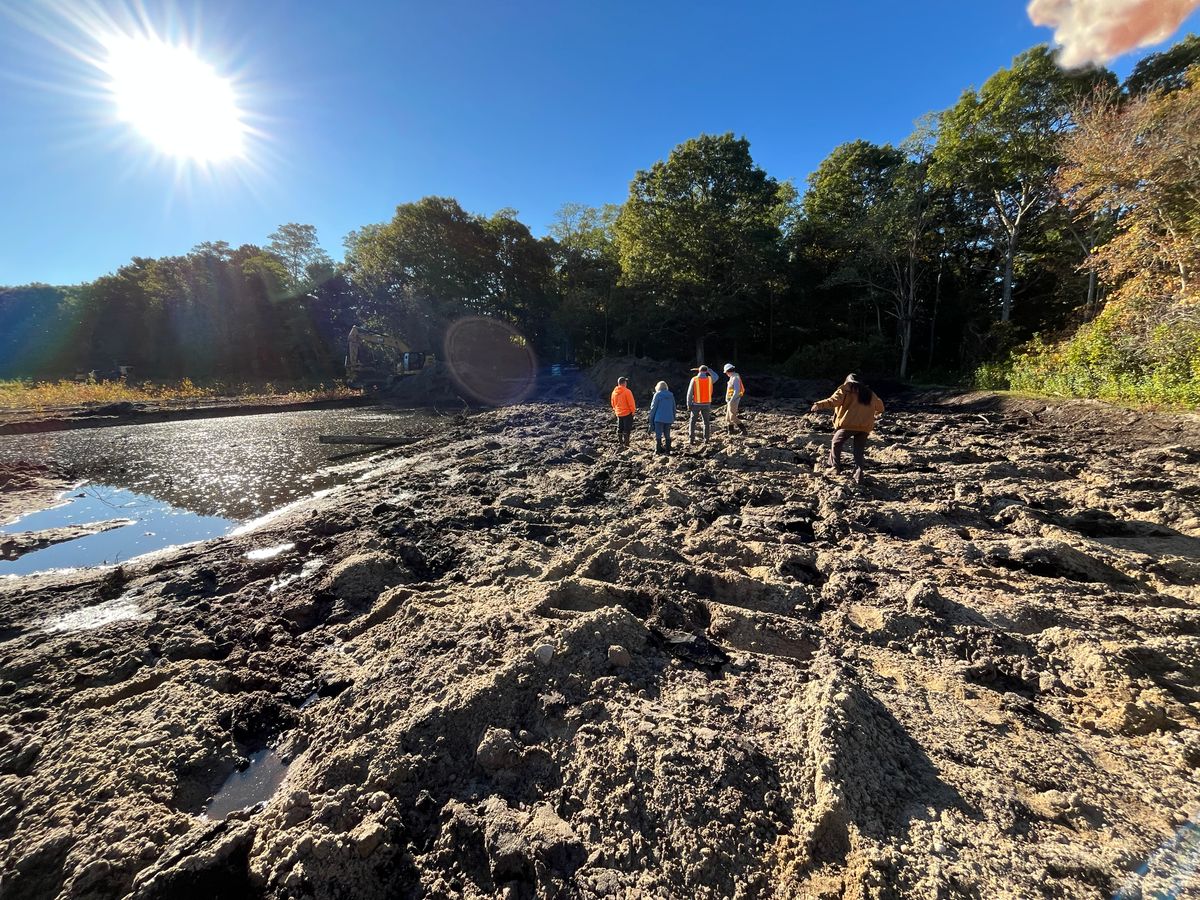
Example microtopography with 12 - 24" amplitude pit and mound.
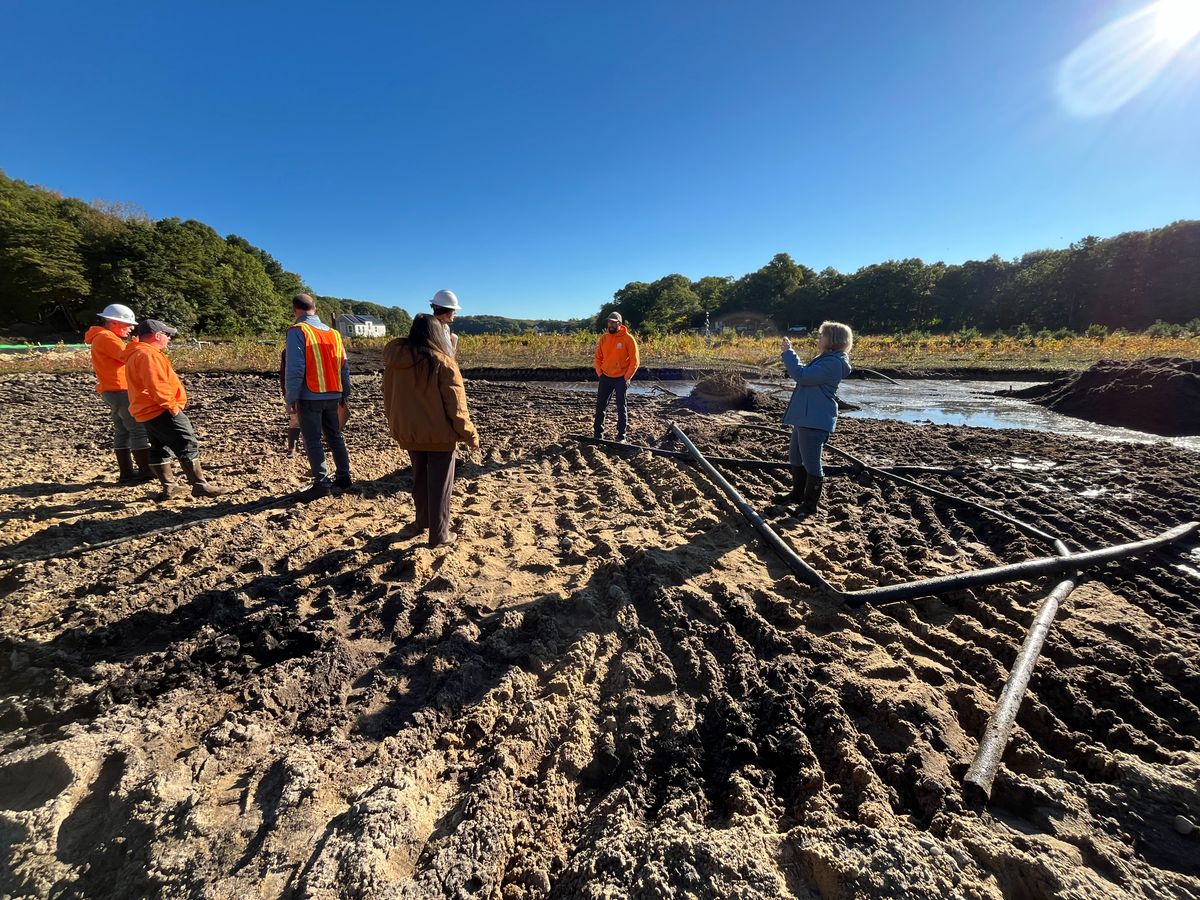
Example graded loam (Note this doesn't contain actual loam surface cover, but the surface texture would likely be similar).
October 9, 2026
