Cold Brook Eco Restoration
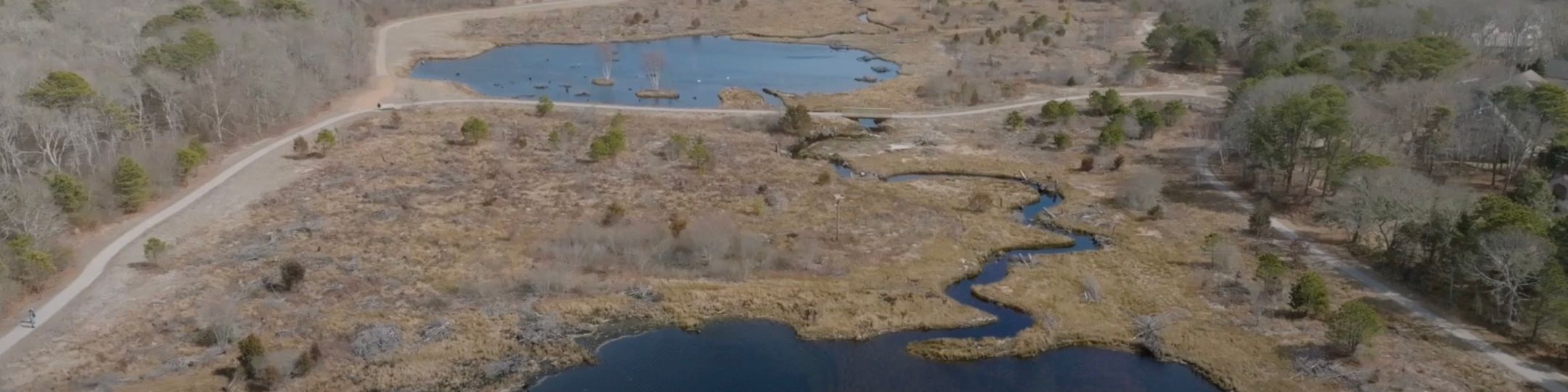
The Cold Brook Eco-Restoration Project, led by Harwich Conservation Trust (HCT) and completed in 2025, transformed a retired cranberry bog into a 66-acre preserve. Goals were to enhance wildlife habitat, improve water quality by removing nitrogen, provide pathways for inland salt marsh migration and expand passive public recreation. The project shaped ponds, installed native plants, built a half-mile wheelchair-accessible trail, and re-naturalized a mile of stream from Grassy Pond to Saquatucket Harbor.
- 2011: Named a Priority Project by DER Cranberry Bog Restoration Program
- Late 2022/Early 2023: Design & permitting completed
- July/August 2023: Bid phase and contracting
- November 2023: Construction start
- June 2024: Substantial completion
- The project currently undergoing post-construction monitoring
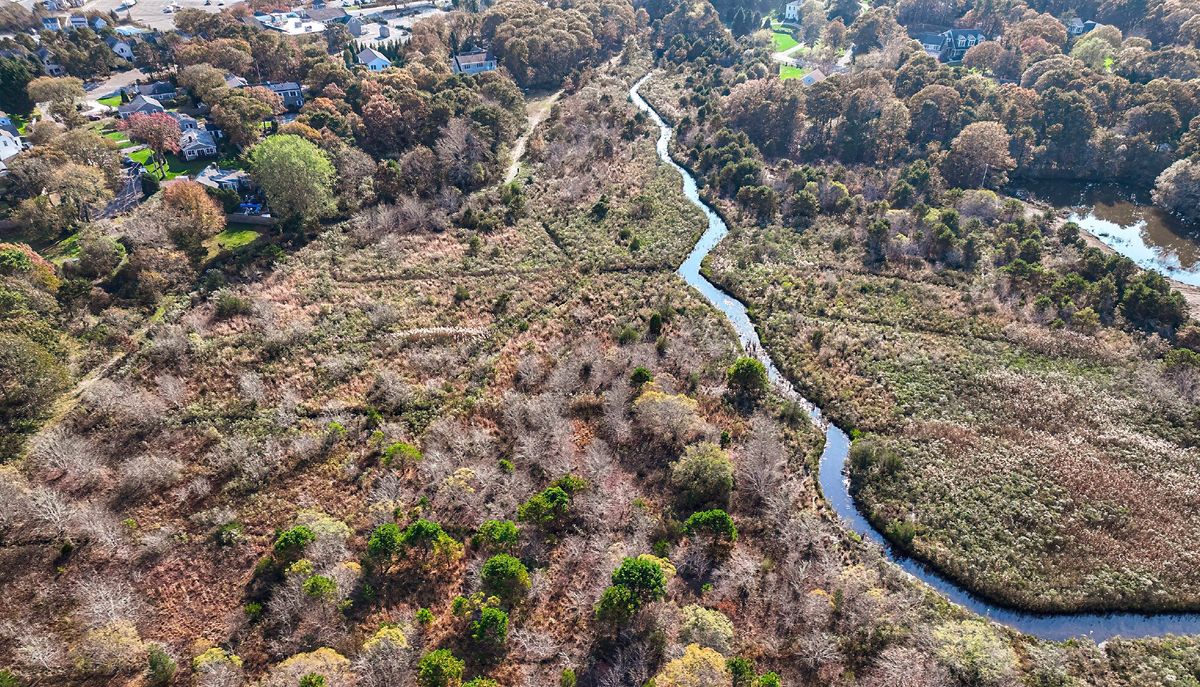
September 2023: Pre-Construction Photograph of Cell 8 (area slated for near term marsh migration), looking south (downstream) (Credit: Steve and Eileen Furlong)
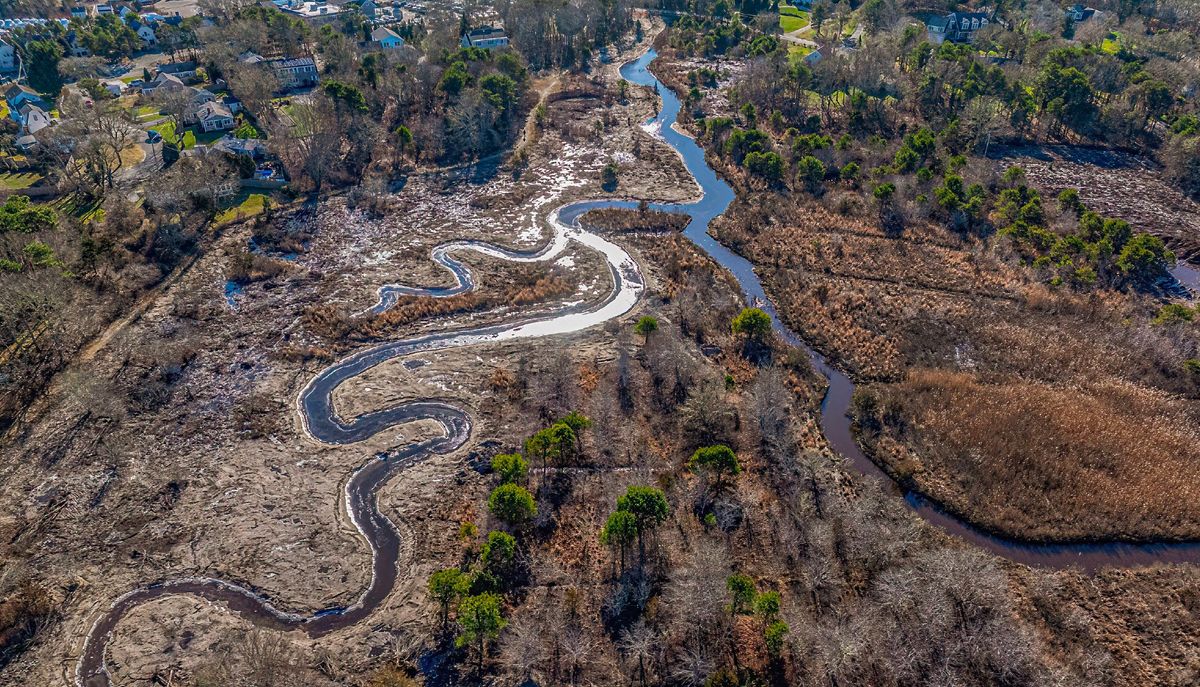
January 2024: Mid-Construction photograph of Cell 8, looking south showing 1) the newly constructed Cold Brook Channel to the left, as well as one of the tidal creeks; 2) area of no-disturbance (“passive restoration”) on right hand side of photo. (Credit: Steve and Eileen Furlong).
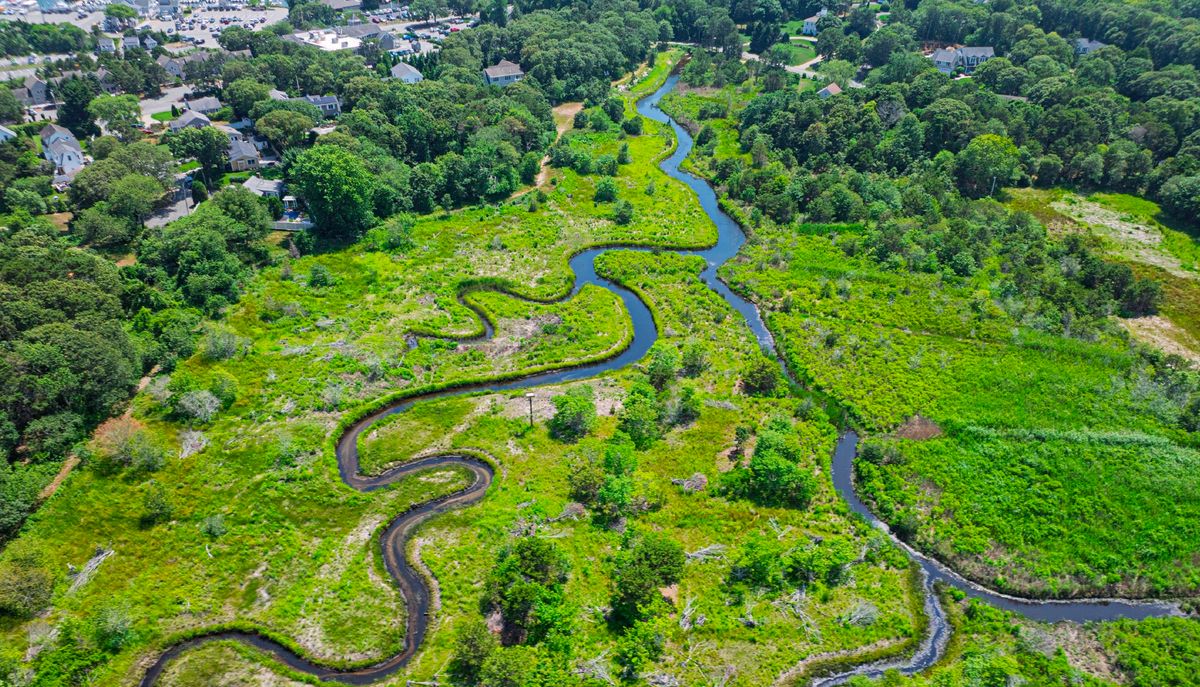
July 2024: Post-construction Photograph of Cell 8, looking south and showing the completed Cell 8. Note that the old Cold Brook channel to the right has been closed off at the extreme right hand side of the photograph. Another tidal creek has been constructed at the extreme bottom of the photo. (Credit: Steve and Eileen Furlong).
This project presented a unique opportunity to design an ecosystem that enhanced nitrogen removal while also facilitating inland salt marsh migration, addressing the challenges of sea-level rise and saltwater intrusion in the lower cells of the Cold Brook bogs and water quality impairment and salt marsh loss in Saquatucket Harbor.
The lower cells of Cold Brook have significant tidal influence and will be vulnerable to submergence and saltwater intrusion due to sea-level rise this century. In the lower bog cells, about a quarter of the site acreage was designed for sea-level rise adaptation and marsh migration. In Cell 8, micro-topography was not applied; instead, the surface was kept flat and a meandering tidal creek was constructed to promote tidal flushing and drainage. This will reduce the buildup of hydrogen sulfides in ponds that can be toxic to developing salt marsh platforms.
The project also incorporated on-channel ponds and emergent marsh to improve nitrogen removal and water quality. These features expand water storage capacity and residence time, allowing plants and microbes more opportunity to take up and transform nitrogen before it flows downstream.
The project also included many of the now standard approaches to cranberry bog restoration:
- removal of dams, dikes, and water control structures;
- sand removal;
- surface roughening (micro-topography) in the upper bog cells;
- full channel reconstruction;
- and construction of trails, boardwalks, and crossings.
For more details about the design and goals restoration project see: Eric Ford (DER) Presentation to SWS 07-16-2025
The project was supported by HCT donors, Town of Harwich voters, the Harwich Community Preservation Fund, Massachusetts Division of Ecological Restoration, U.S. Fish & Wildlife Service, MassTrails, Inter-Fluve, Inc. (consulting), and SumCo Eco-Contracting (construction).
In 2025, Cold Brook received the Conservation Excellence Award (Massachusetts Land Trust Coalition) and the Grand Conceptor Award (American Council of Engineering Companies of Massachusetts).
Early monitoring shows diverse habitat recovery, improved water quality, and wetlands better able to absorb stormwater.
Follow the project’s ongoing activity: Harwich Conservation Trust – Cold Brook Eco-Restoration Project.