
Living Observatory Sensor Network
Audio Boxes
As we built out the wireless network on the bog surface, we wanted to be able to stream audio from locations where wired power and network connections were unavailable. To accomplish this, we developed solar-powered audio streaming boxes that could connect to up to two microphones and stream MP3 or Ogg Vorbis audio over Wi-Fi.
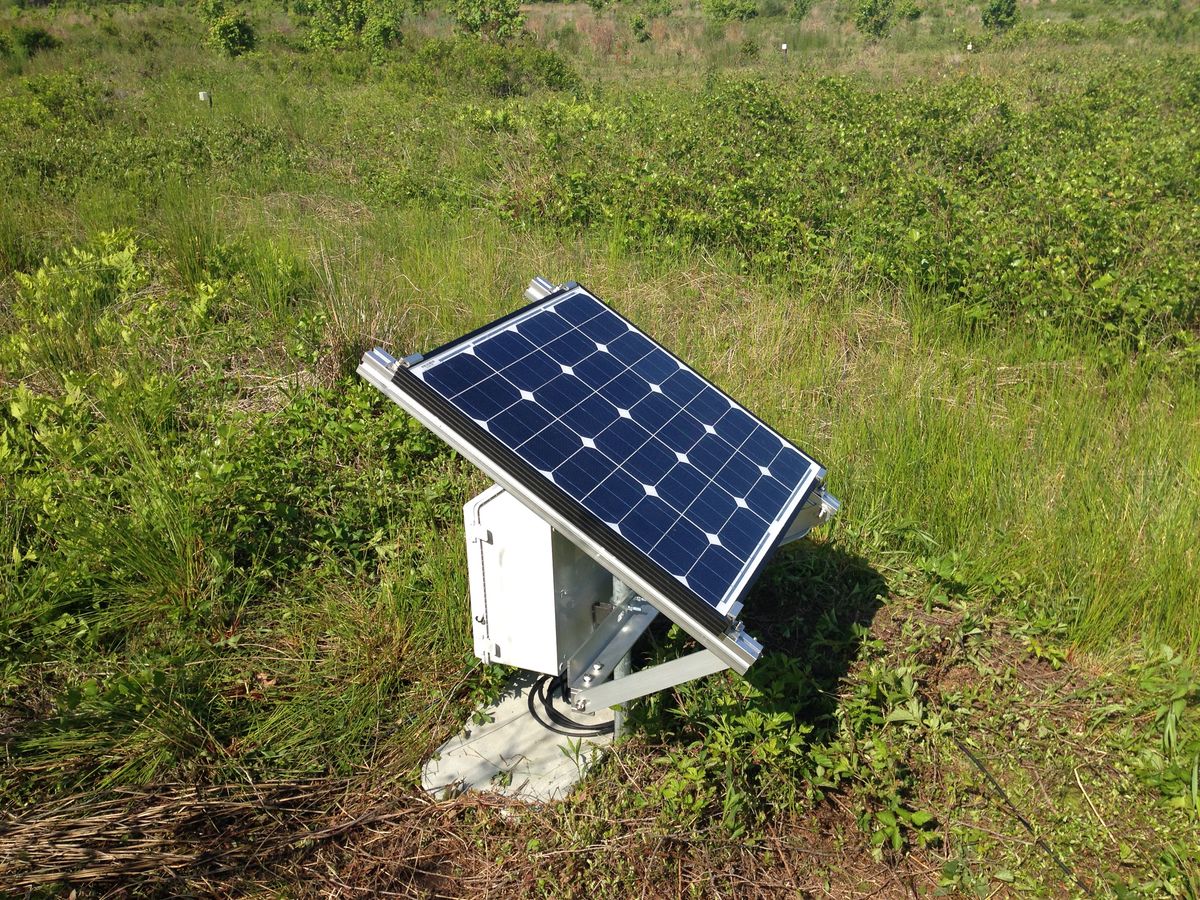
The most prominent component of the setup is a large solar panel. We used panels ranging from 25-50 watts, which charged an 18 amp-hour lead acid battery inside the box with an inexpensive off-the-shelf solar charger.
The task of capturing and encoding the audio data requires an audio interface and computer. We used an off-the-shelf stereo USB audio interface (both Focusrite and Behringer interfaces were used at various points).
Today, a Raspberry Pi would be the go-to solution for the computation in a device like this. However, this was 2013, and the original Raspberry Pi had only recently become available. The original Pi was barely capable of encoding two channels of audio in real time, was rather power inefficient, and had no built-in wi-fi (requiring a USB wi-fi adapter and further adding to the power consumption).
Our first successful units used a BeagleBone Black single-board computer. The power management was a significantly better than the original Raspberry Pi, and the CPU was better able to comfortably encode live stereo audio. The BeagleBone did still require a USB Wi-Fi adapter.
The ultimate version of the audio streaming box used the Intel Edison computer-on-module. This was a tiny module with dual-core Atom processors, produced during a time where Intel was briefly interested in the Internet of Things/Arduino space as well as Intel-based smartphones. It had remarkably low power consumption, real floating-point hardware (allowing the audio encoder to run very efficiently) and on-board fast Wi-Fi. It was discontinued with no replacement a couple years later (Intel never really figured out how to market it) but it was excellent for our application.
The initial audio streaming box used the same microphone design as our prototype deployment at the Arm, but it was clear that we could make some improvements to its robustness and sound quality.
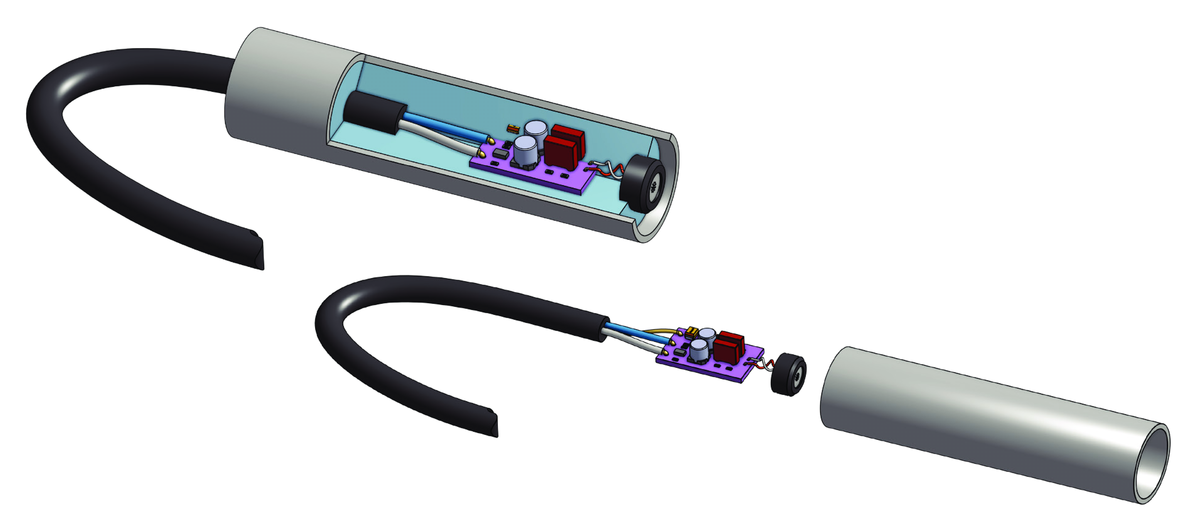
The updated microphone (shown in cutaway above) uses a similar circuit, but with physically larger capacitors which improves the audio quality (the whole circuit board could be physically larger as it no longer needed to fit within the XLR connector shell). The same microphone capsule was used.
The assembly is inserted into a section of aluminum tubing and completely potted with blue silicone rubber, except for the very front of the microphone capsule. This makes it nearly impossible for water to get inside.
The design has been extremely successful—we have been using these microphones for about 10 years now. While several have been killed by lightning strikes, otherwise exposure to the elements has not been an issue. (We even had one that accidentally fell in the water and operated for quite a while as a hydrophone!)
We operated two boxes for several years, both along the west side of Tidmarsh. One was up on the hill near the base station, and the other was down on the bog surface. This unit was removed to allow the construction work to proceed.
On both units, one microphone was installed with a short cable near the box, and another long cable ran up to 100 feet to provide audio from a different location.
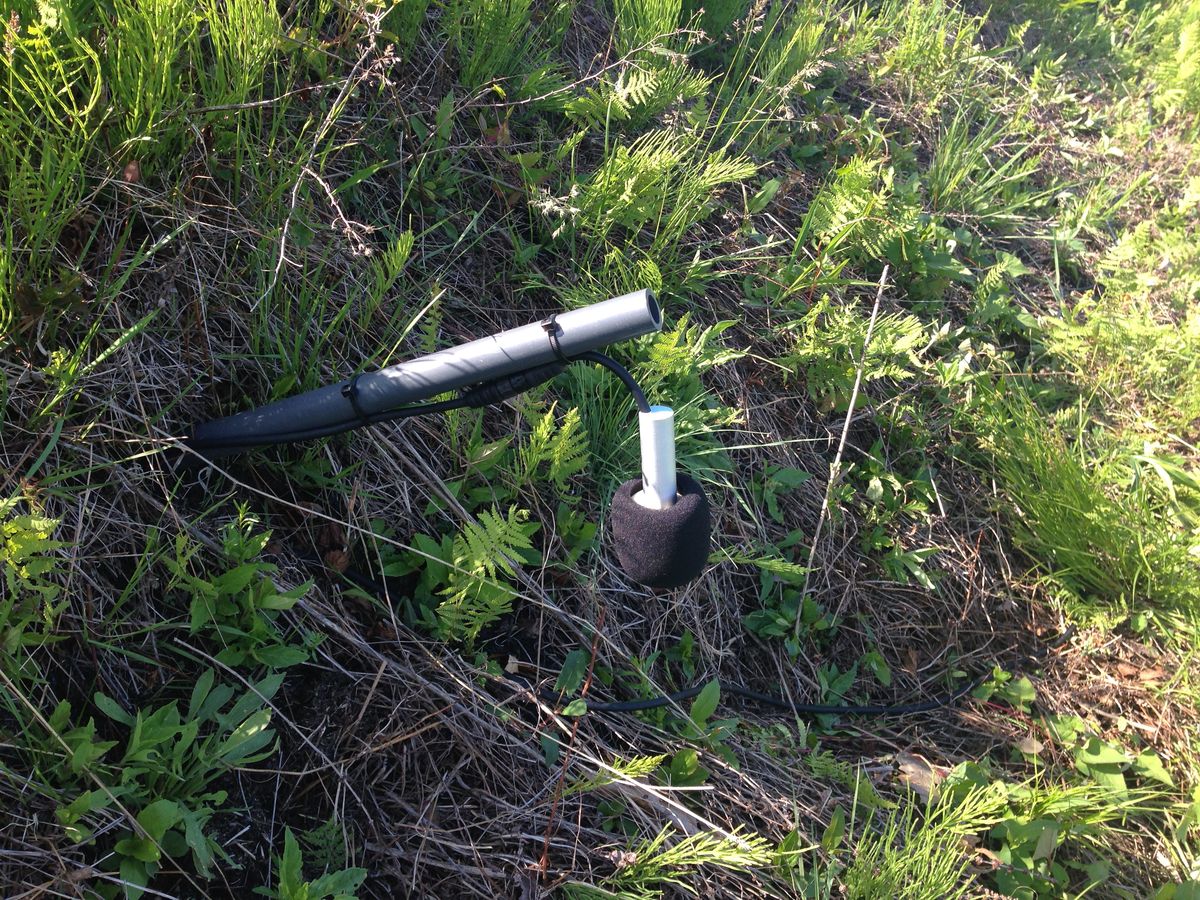
A v2 microphone hanging from a short piece of pipe, with a foam windscreen.