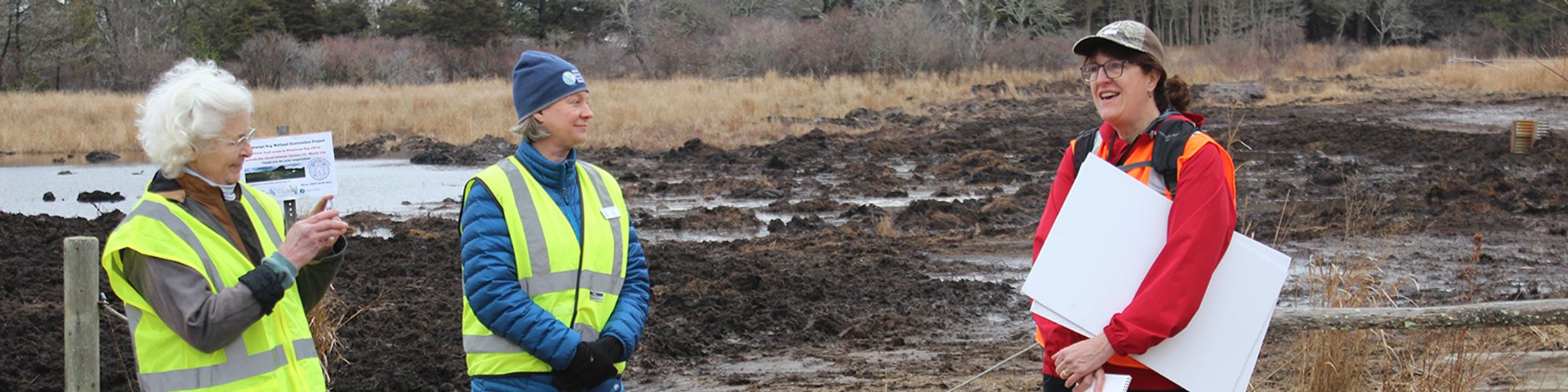
Windswept Bog, Nantucket Island MA: Watershed-scale Wetland Restoration and Research
Initial Stages of a Restoration Project
The Nantucket Conservation Foundation’s (NCF) property holdings at the Windswept Bog contain a diverse collection of natural habitats, including 234 acres of restored wetlands, hardwood forests, grasslands, wet meadows, shrub swamps, and freshwater ponds. Prior to 2018, Windswept Bog was a 40-acre certified organic cranberry bog operated by the Foundation; it is now restored to a naturally functioning wetland. The surrounding protected conservation land provides miles of walking trails that connect to several thousand acres of additional Foundation-owned land in the Middle Moors via property owned by the Nantucket Land Bank to the south.
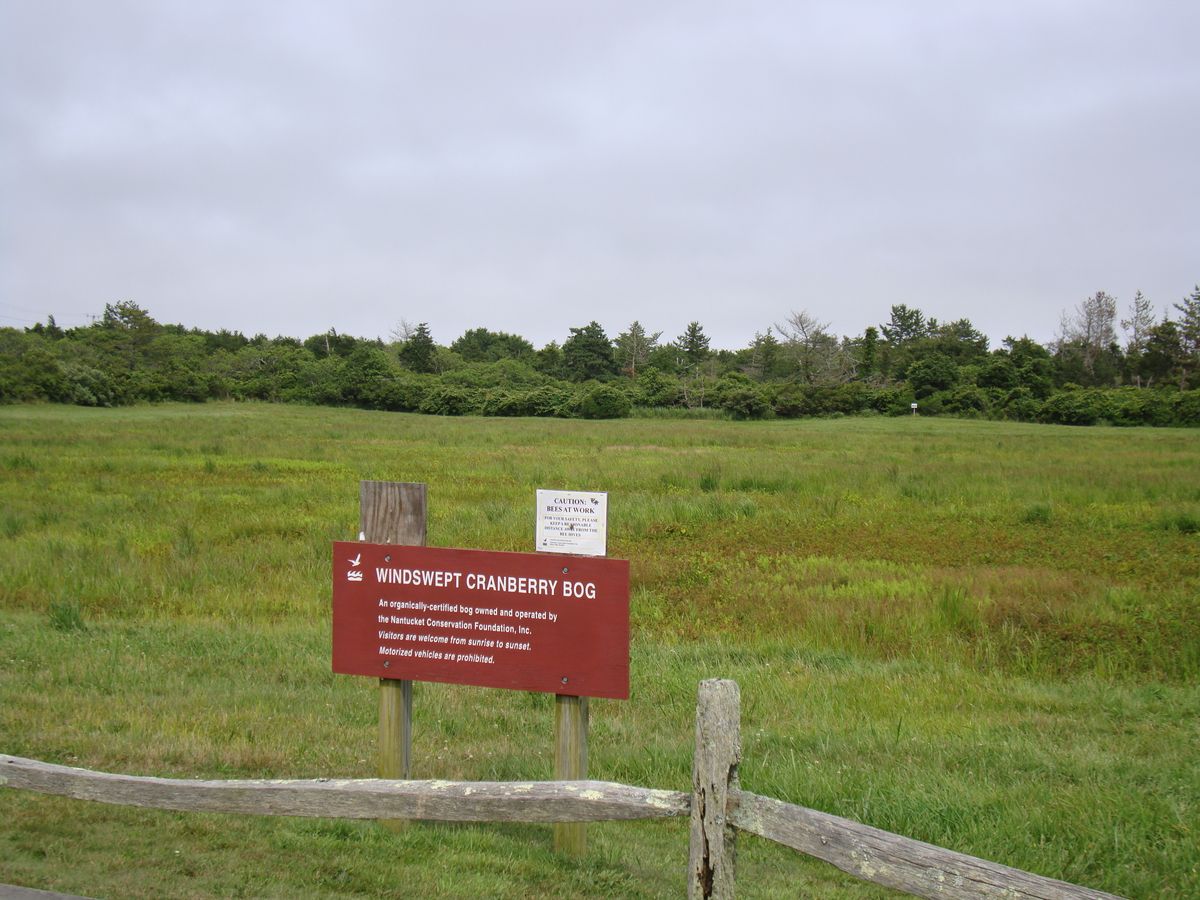
Windswept Bog was a human-made bog built in the early 1900's. For many years, it was farmed by the Nantucket Cranberry Company, a locally-owned private entity. The property was purchased by the Nantucket Conservation Foundation in 1980. Under NCF ownership, it was Initially leased to a commercial grower (Northland Cranberries), with NCF taking over cultivation in the early 2000's. Cranberries have been grown on Nantucket Island since 1857 and were once an important part of Nantucket Island's economy for many years. While this tradition continues at the Foundation's nearby Milestone Cranberry Bog, NCF's Board of Trustees voted to retire cultivation at Windswept in 2017.
In addition to the many economic and climate-change related challenges associated with growing cranberries in southeastern Massachusetts, Nantucket also had to contend with the high cost and logistical complications of shipping its cranberries to the mainland via ferry for processing. Because of this, cranberry growing is currently being continued on a more limited basis (~20 acres farmed) at Milestone Bog, where all fruit harvested is dry picked and only sold locally.
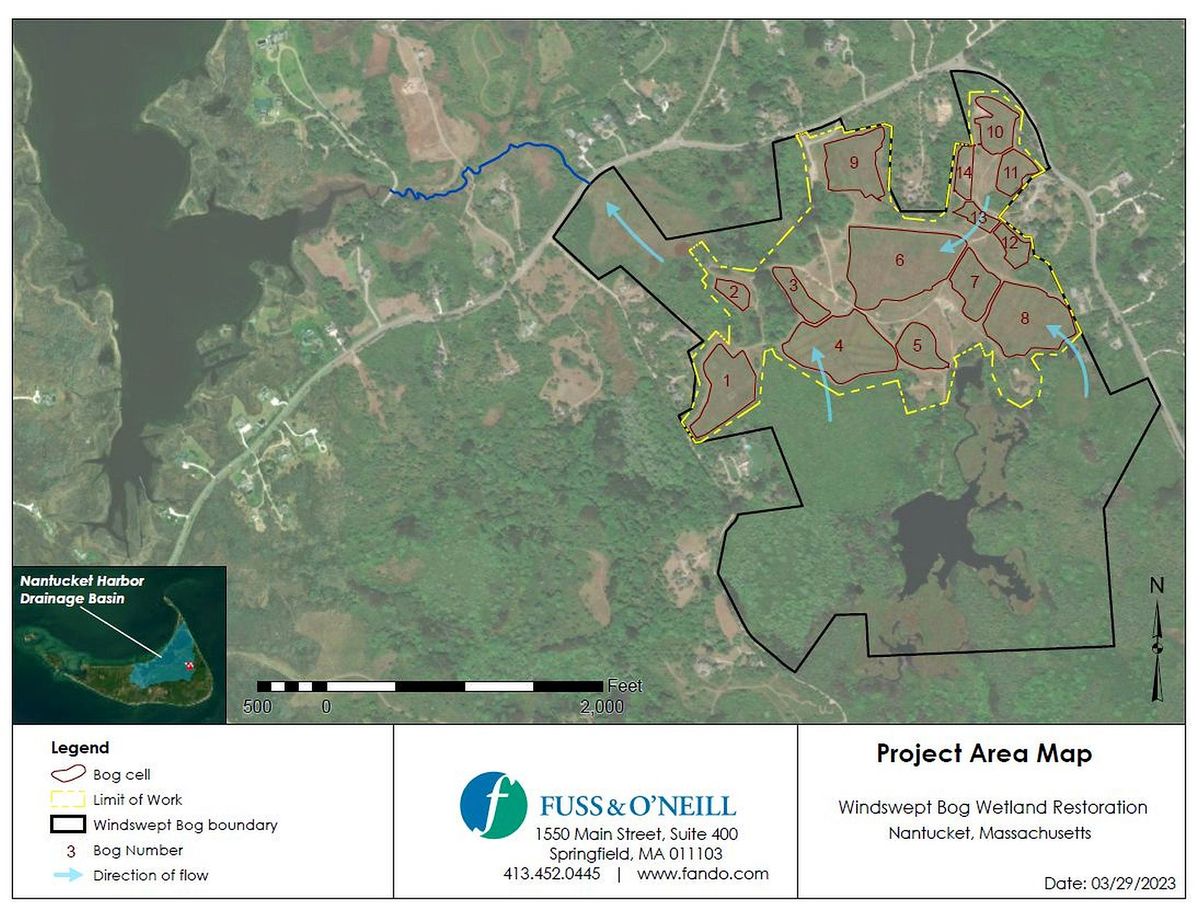
The Windswept Bog site is directly connected to Polpis Harbor (an embayment of Nantucket's main harbor, see figure above) approximately 1/2 mile downstream. Concerns regarding potential water quality impacts, in addition to previously mentioned economic and logistical factors, contributed to the Board's decision to no longer grow cranberries at Windswept.
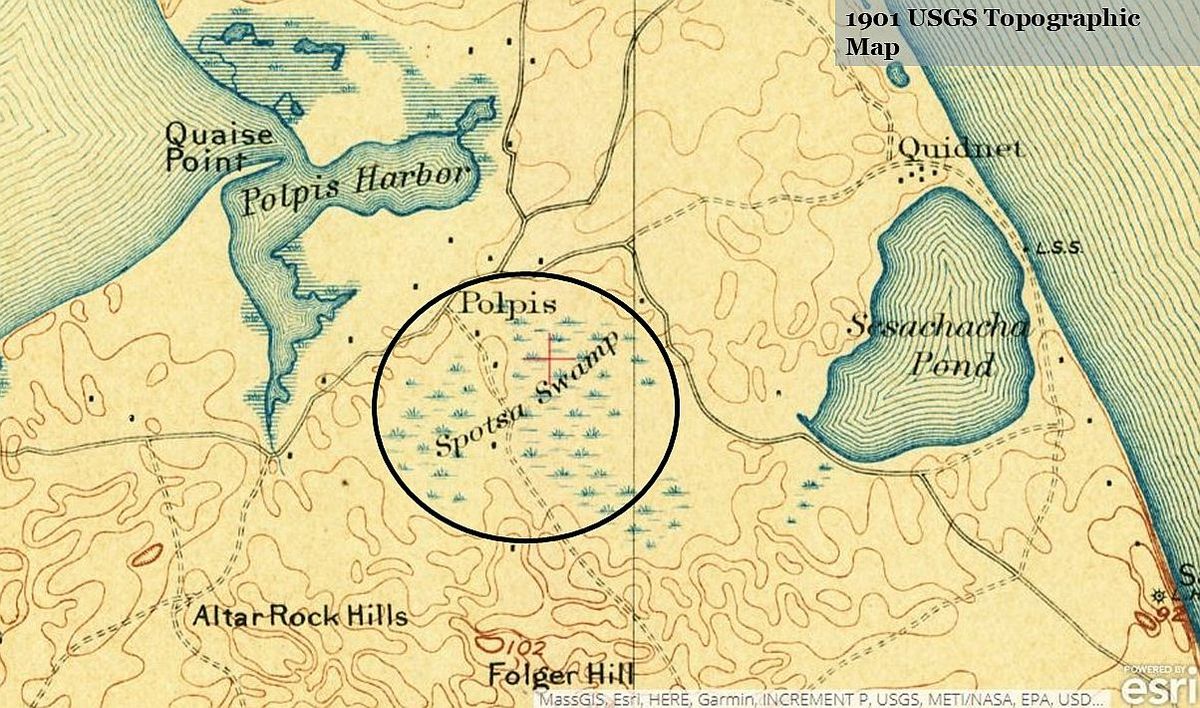
As a conservation land trust, NCF's priority was to determine the most ecologically beneficial future outcome for this site once cranberry growing was retired. To do this, NCF’s Department of Ecological Research, Stewardship and Restoration reached out to the Massachusetts Division of Ecological Restoration’s Cranberry Bog Program (Mass DER) for advice and assistance. Because the cranberry bog was constructed in the early 1900's, prior to the availability of aerial photos of the island, there was little information on what habitat types historically existed on the property. However, a 1901 USGS topographic map of the island showed the Windswept site labeled as "Spotsa Swamp," indicating the likely presence of wetland:
With assistance from Mass DER and funding provided by USGS Natural Resource Conservation Service, a ground penetrating radar study was conducted of the Windswept site to further clarify the historic site conditions prior to cranberry bog development. Soil investigations associated with this study showed most points containing organic soils with a sanded surface layer characteristic of farmed cranberry bogs. The observed depth of the sanded surface ranged from 12 to 26 inches with an average of approximately 17 inches. The measured depth of the organic muck ranged from nonexistent at some points to 13.3 feet. Based on the results of this study, all areas of the cranberry bog surveyed showed evidence of historically hydric soils, indicating the presence of former or degraded wetlands.
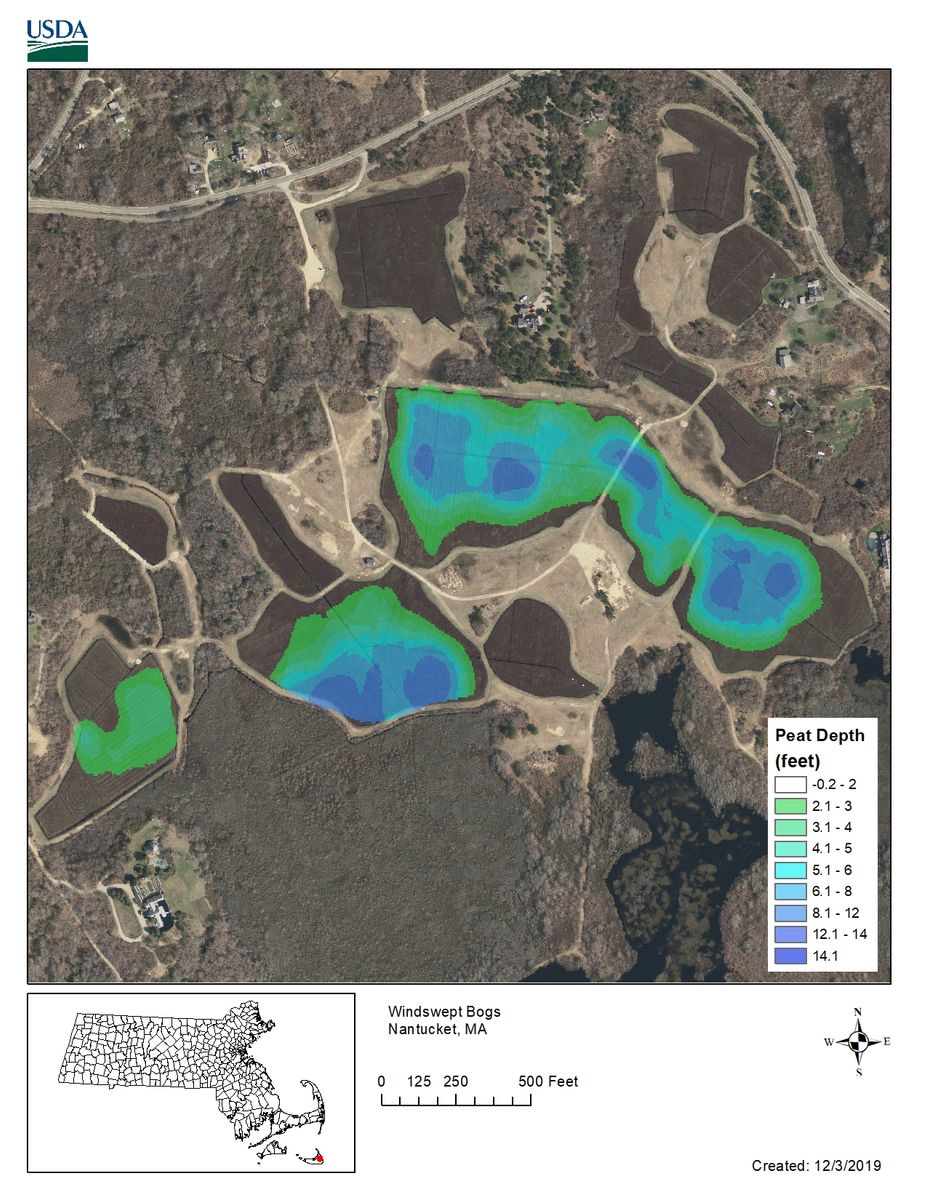
Documenting the prior presence of wetlands was a critical piece of information needed to support NCF's application for Priority Project Status with Mass DER. The Windswept Bog Wetland Restoration was subsequently selected as a Priority Project by Mass DER’s Cranberry Bog Program in 2020. Through this program, Mass DER works with local, state, and federal partners to provide technical services (such as engineering, design work, permitting and construction assistance), small grants, and project management and fundraising assistance to landowners interested in restoring wetlands on retired cranberry bogs. Mass DER has since been a steadfast partner on this project.
