Living Observatory Community Platform
Learning Initiatives
Before Living Observatory, I worked for 3 years as a Postdoc at the UMass Cranberry Station. My time there showed me what a unique community exists around cranberries. The Massachusetts cranberry industry has a lot going for it, and I believe it will remain an important part of the culture and economy in this region for decades to come.
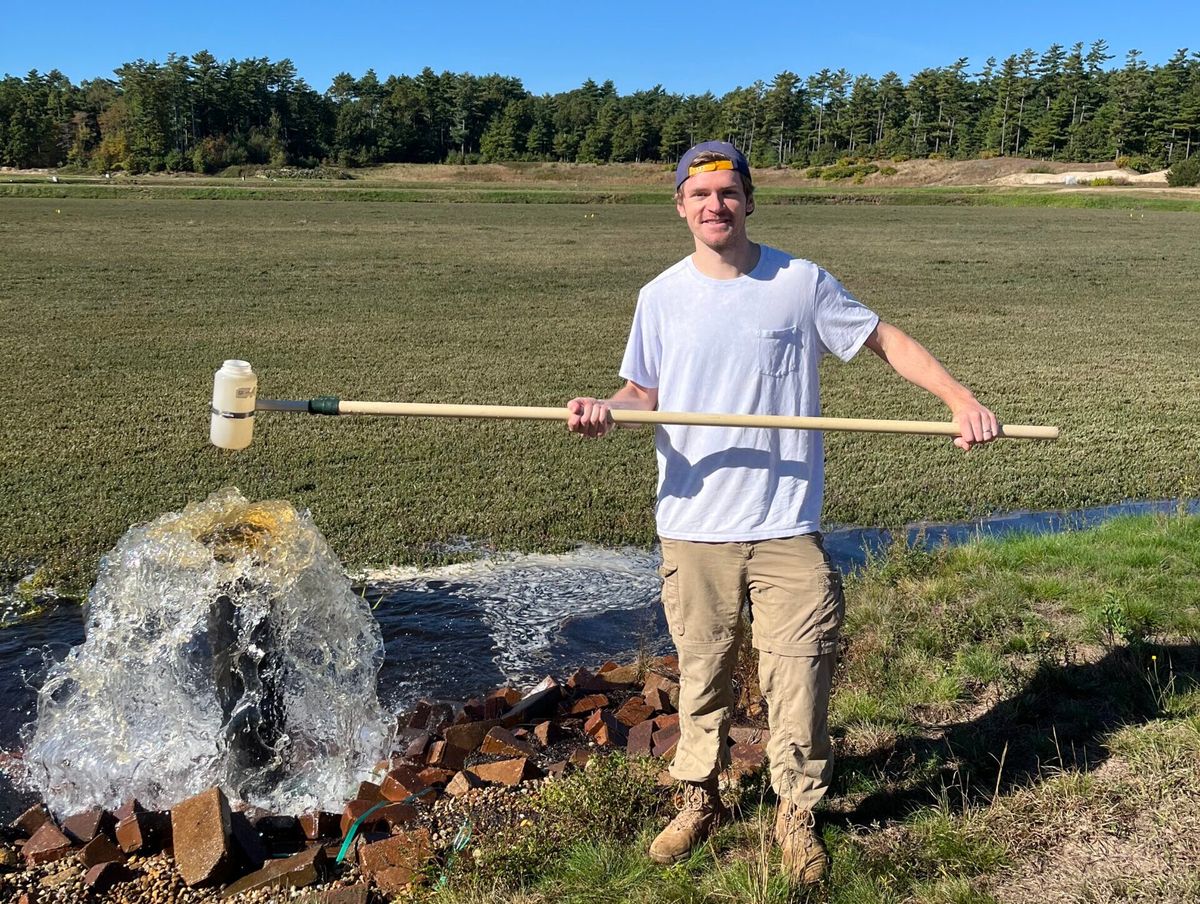
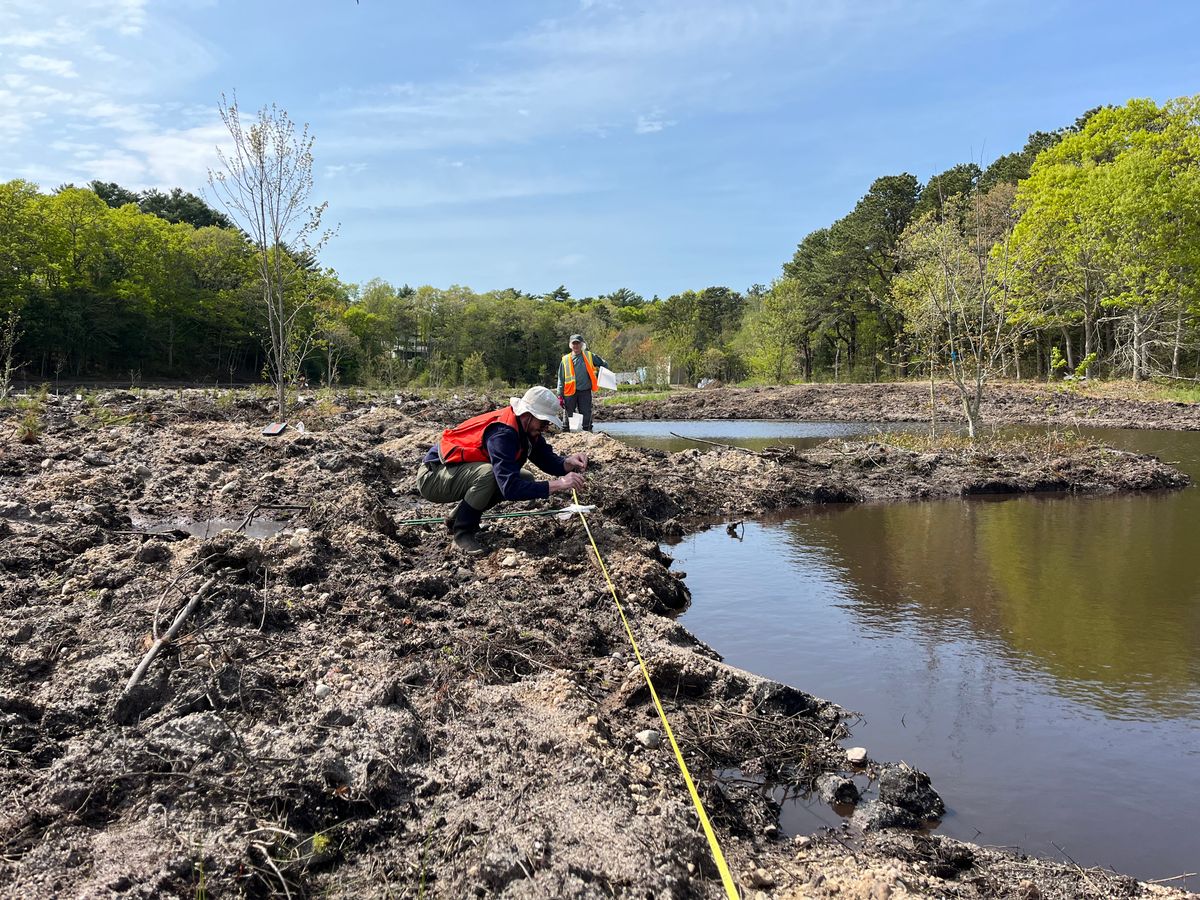
(me collecting a grab sample)
There many of reasons for beds going out of production:
- With a now globalized cranberry market farm economics are pushing out marginal producers.
- On top of that, new varieties are making it possible to get the same yield on half as much acreage.
- Some growers are looking to retire, while growers are focusing their efforts on the most productive beds and need cash for capital investments.
Either way a compelling case can be made for land conservation to growers in both camps.
"According to CCCGA, there are approximately 13,500 acres of active cranberry farmland in Massachusetts today, and roughly four times that amount in associated land areas controlled by these landowners. There are several thousand more long-abandoned cranberry bogs that have recently been mapped by the Massachusetts Division of Ecological Restoration (DER) Cranberry Bog Program." [Making Space Grant]
Potentially thousands of acres of long abandoned and soon to be retired farms.
Insight: When evaluating former cranberry farms that have potential for restoration and inland marsh migration, modern GIS tools can add a significant number of properties to those identified using historic topographic maps.
Early activity by the organization helped to define what was possible for a wetland restoration on cranberry farms.
Our role: Connect, Observe, Share
Questions:
- What practices to employ?
- What does success look like, how do we measure it?
There is now a growing body of best practices being deployed.
Many restored sites that appear to be on a wetland trajectory.

It is really difficult to get a restoration project completed.
Example: Upper Coonamessett River Ribbon Cutting Ceremony – Reflections and Updates
A landowner must decide to conserve the land…
An organization must value the site...
Then there is...
Partnerships...
Funding…
Contracts...
Design…
Permit…
Bid...
Build…
Our community is continuing important detailed site monitoring. However, with vision and leadership from Alex Hackman (Mass Audubon). As part of the making space initiative, we are now working with partners to better understand organizational processes that influence how much land gets conserved and restored.
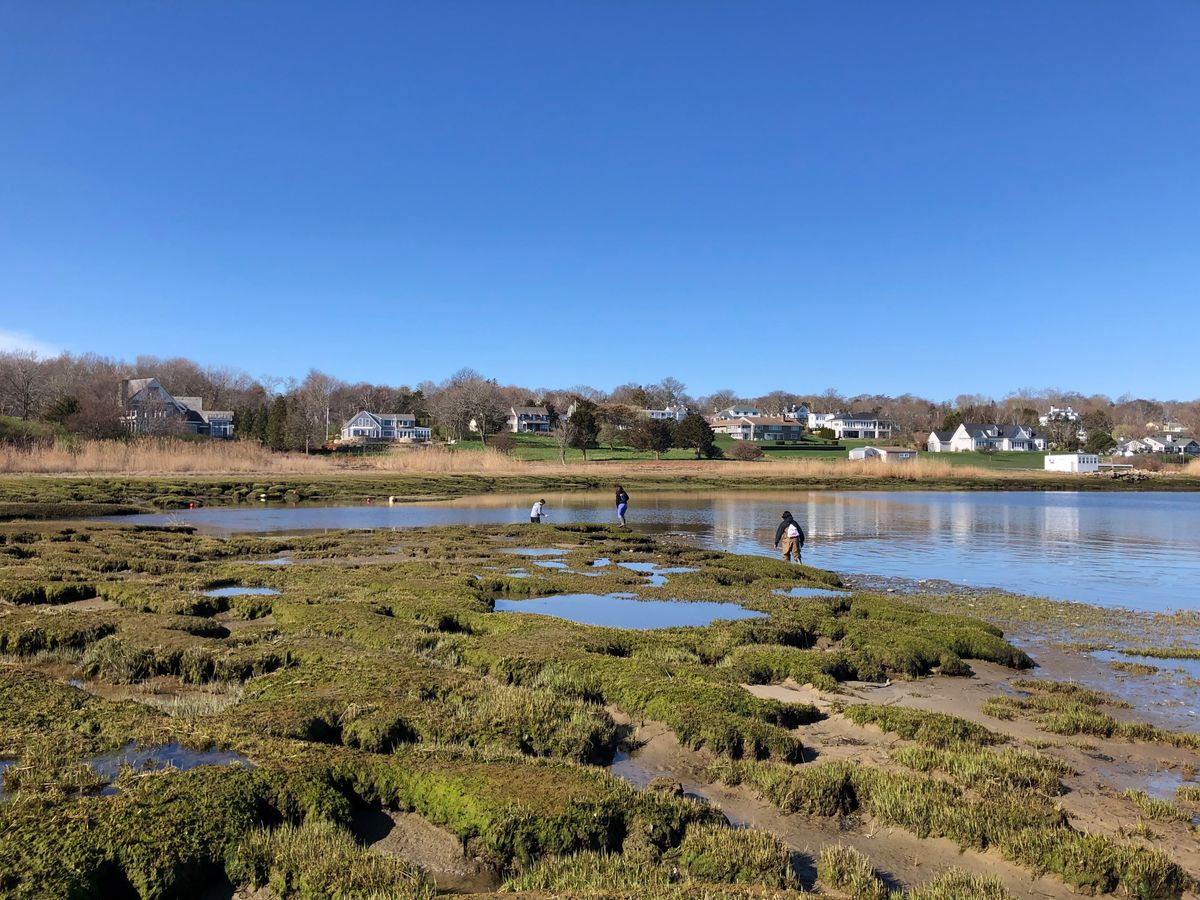
(Credit: Lou-Anne Conroy)
Making Space: Restoring Cranberry Bogs for Marsh Migration
Funder: NOAA
Lead Org: Mass Audubon (Alex Hackman, Andrea Jerabek, Sara P. Grady, Emily Jones and Tiare Sierra Rivera )
Mission: protect and restore hundreds of acres of low-lying coastal wetlands in the region to make space for future marsh migration.
Strategies:
- 1) prioritize sites and engage directly with interested landowners to enroll potential projects
- 2) complete two pilot projects
- 3) build a robust network of practitioners and partners for sustained effort.
Partners: Cape Cod Cranberry Growers’ Association (CCCGA Brian Wick and Grace Dooner), Native Land Conservancy (NLC Diana Ruiz and Asa Peters), Buzzards Bay Coalition (BBC, Sara Quintal), the Town of Falmouth (Elizabeth Gladfelter) , Living Observatory
This is really about how to scale up conservation efforts across the region?
To support this we’ve expanding from monitoring individual sites to monitoring select organizations and programs.
(If a tree falls in the forest, but no one around to hear it…) If you have an idea but never share it, what is it worth? Field observations passed person‑to‑person become a game of telephone. Details get lost and facts drift. Observations degrade into anecdotes.
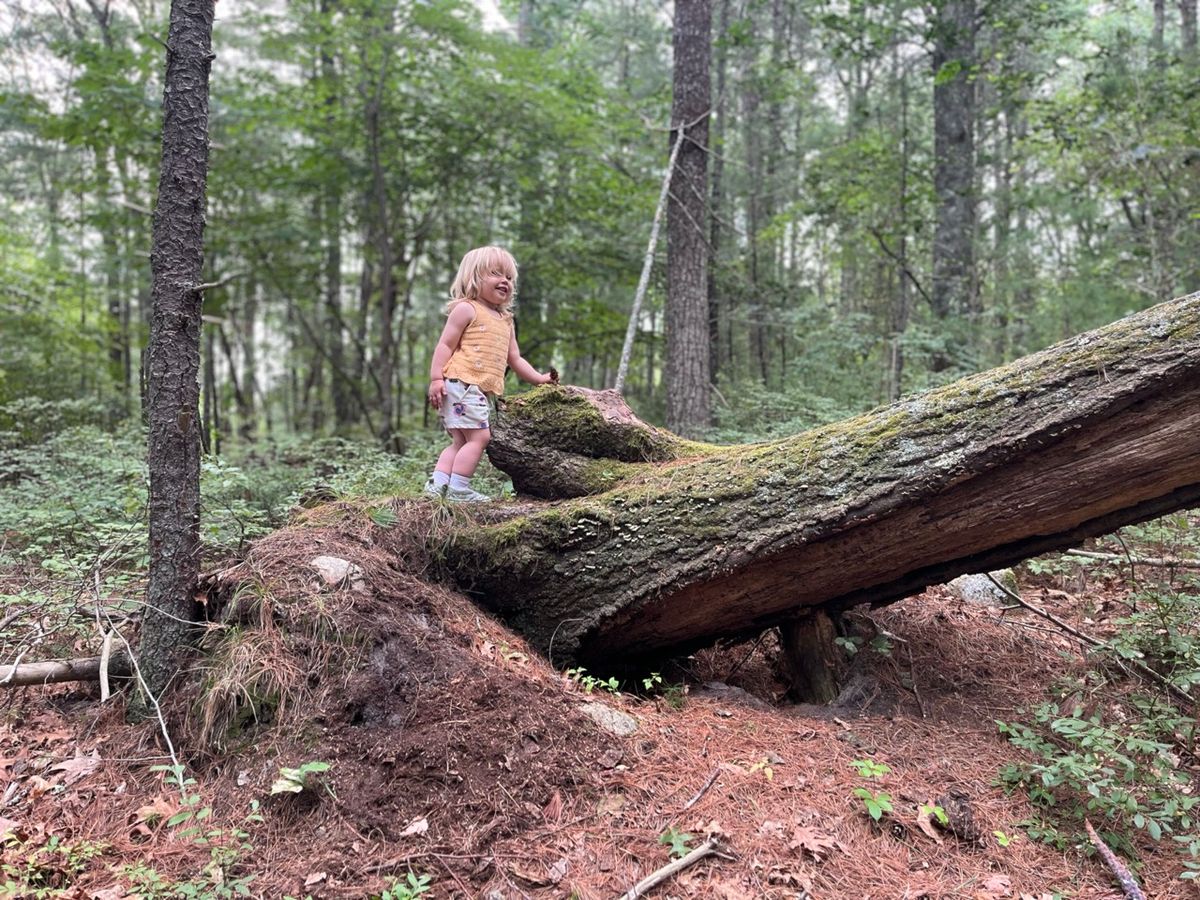
(Credit: Adrian Wiegman)
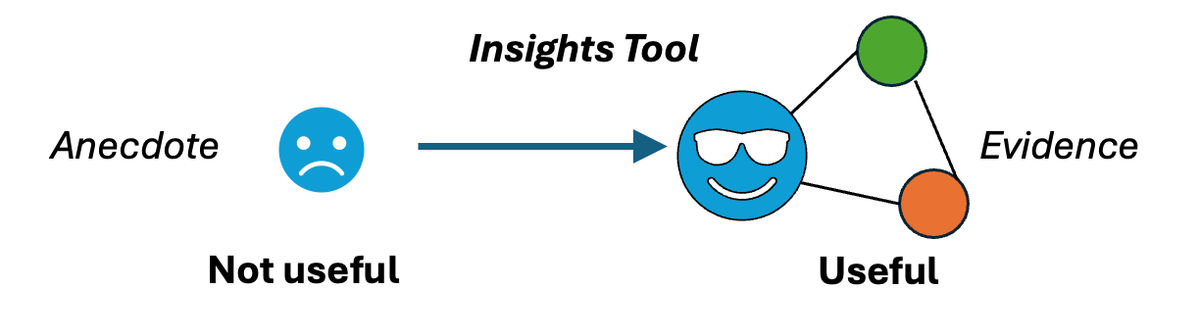
Insights preserve context by attributing:, Who, What, When, Where
Insights transform anecdotes into evidence, making our observations more accurate and actionable.
I mentioned before that a lot of our early work focused on how to get a restoration done. This is reflected in the insights we've captured. Most of the early insights are about the technical things, like on the ground details of a restoration. How to do a specific thing. Our observations come from a place of familiarity.
Christine Hatch is a hydrologist, so she is inclined to make observations about to water.
Insight: Water in a channel vs. water on the bog surface has multiple tradeoffs:
Kelly Omad is a botanist so she is inclined to have insight on plants.
Insight: Save some ditches with native plants
Hunch: ... without intentional focus to the partner-organization level. Individuals will continue focus learning topics that are within their wheelhouse and/or within their locus of control.
How do we shift attention to topics that are unfamiliar or uncomfortable?
When Brian Mayton first released the insights tool and we introduced it to the making space partners, we were like the dog that caught the car. It's great that you we capture people's insights, but where should we focus our efforts? Events and gatherings generate lots of ideas and questions, but if we were to go around and track down each idea then we wouldn’t get anything else done.
Fortunutely, strategic learning was incorporated as part of the grant. So Last fall, Andrea Jerabek and I worked with Keri-Nicole Dillman to develop strategic learning plan.
We did this by asking what are the critical information gaps we need to fill in order to reach our goals?
Without intending to do so, each of four priorities we selected had to do at an human-organizational aspects rather than technical elements of a restoration projects.
Insight: Our strategic learning efforts have exposed the organizational and human challenges that must be solved to advance restoration projects
So the focus of the insights being generated by our partners also now includes collaborative program level challenges.
Example Insight: There are two sides to any partnership... so put yourself in your potential partners shoes.
As the practice of cranberry farm wetland restoration has grown, and LOs focus must expand from individual people and sites to also encompass organizations and programs.
(Note: this is a funding collage from Tidmarsh, now there are many more partners to acknowledge. See our Partners page for a more complete picture of who has been involved over the years)
Our a large part of our work still includes Monitoring of Wetland Restoration Properties (including DER priority properties), but now we are also pursuing strategic monitoring of how organizations and programs function across the region (e.g. Making Space).
Our core role remains the same:
- Connect people and facilitate interactions (e.g. LO Platform, Summits)
- Monitor restoration sites AND organizational learning processes.
- Share and maintain access to information (e.g. LO platform and Insights Tool.)
- Interpret data and observations to identify critical information gaps and help partners identify and select learning priorities.
We think these services benefit regional conservation efforts holistically.
So what's new?
- Then: how to do a restoration?
- Now: how to get many restorations done?
How: work together.

(Windswept site tour Hosted by Nantucket Conservation Foundation and Fuss and O'Neill - Credit: Karen Beattie)
Over our history we've seen first hand the many benefits of forging a community around collective interests. By embracing technology and fostering our community, we aim to increase public information access and engagement, facilitate conversation and collaboration, and help ensure the long-term stewardship of open lands.
Author
